
Many tourists fall in love with Nosara and consider moving there permanently for both personal and financial reasons. It’s not just about the picturesque scenery – you desire a balance of lifestyle and financial stability. Therefore, it is crucial to consider the market, legal aspects, and timing to avoid costly surprises in the future.
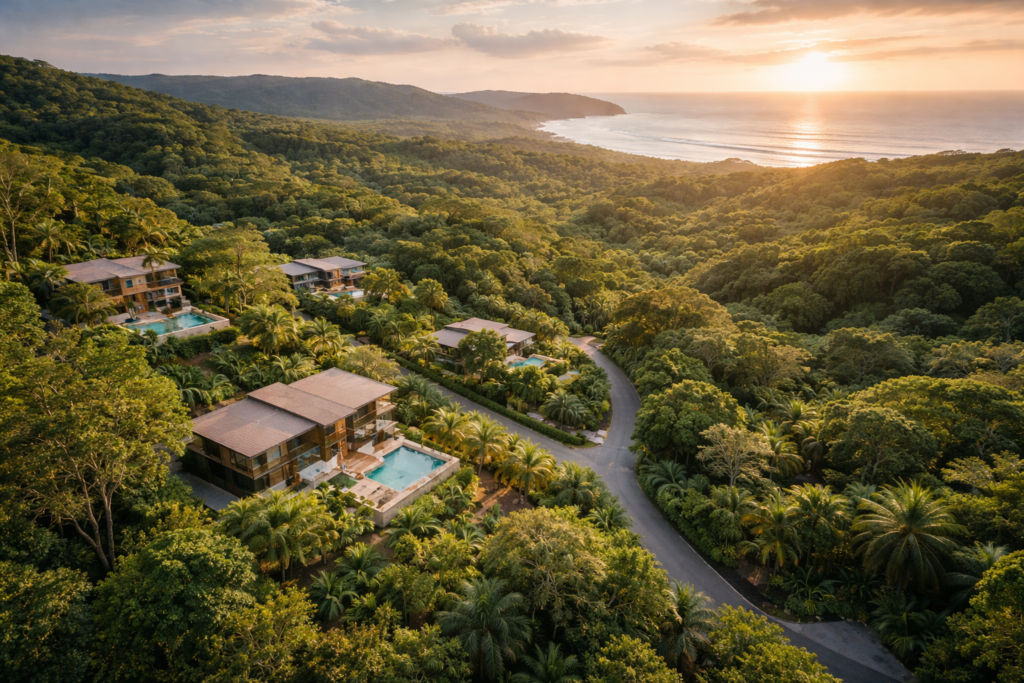
In this post, you’ll walk through what to watch for in Nosara real estate, how to protect your investment.
Key Takeaways:
- A lot of people think investing in Nosara is just about snagging a pretty beach house, but the real value comes from understanding each neighborhood, how close you are to surf, schools, and services, and how that lines up with the lifestyle you actually want day to day.
- The local market isn’t just “hot”, it’s very specific – beachfront, walk-to-the-beach, and eco-conscious builds tend to move fast and carry a premium, so going in with realistic budget ranges and clear must-haves vs nice-to-haves will save you a ton of stress.
- Legal stuff in Costa Rica is pretty friendly for foreigners, but skipping proper due diligence, a solid notary, and a title check is where people get burned, so building a trustworthy local team is just as important as finding a pretty listing.
- Buying in Nosara works best when you treat it as a step-by-step project – shortlisting areas, visiting at different times of year, negotiating smart, checking utilities and access, then closing carefully – instead of rushing in after one dreamy sunset.
- If you want long-term peace of mind, think beyond the first year: rental potential, resale value, road access in rainy season, water availability, and future development around you can make the difference between a dream property and an expensive headache.
Why Buy Property in Nosara?
You get something in Nosara that most beach towns lost years ago: real growth without the chaos. Property values have climbed steadily for over a decade, with many residential lots in hot areas like Guiones and Pelada doubling in value over 7–10 years, yet you still wake up to howler monkeys instead of construction noise. Tourism keeps rising year after year, fueled by surf, yoga, and wellness retreats, which means strong demand for short-term rentals. It’s not unusual to see well-located homes here reaching 60–80 percent occupancy during high season when priced correctly. That blend of lifestyle and predictable demand is exactly why investors continue to choose Nosara instead of chasing the next overdeveloped beach town.
Developments like El Bosque Nosara embody this balanced growth model. El Bosque Nosara is a luxury eco-community designed for low-density living, offering thoughtfully planned lots surrounded by nature, while maintaining modern infrastructure and long-term sustainability standards. Rather than mass development, El Bosque focuses on preserving green spaces, privacy, and architectural harmony with the environment—an approach that aligns perfectly with what today’s buyers and renters are actively seeking in Nosara.
You’re also buying into a community that genuinely supports long-term value. With no large all-inclusive resorts and significant portions of Nosara located within or adjacent to protected areas, growth is carefully managed. Local associations help fund roads, recycling programs, security, and schools, all of which directly influence property values. Buyers coming after you are intentionally looking for that mix of nature, infrastructure, and low density. In simple terms, developments like El Bosque Nosara allow you to enjoy your property now, generate rental income when you’re away, and still position yourself for meaningful appreciation over the next 5, 10, or 15 years.
Understanding the Nosara Real Estate Market
You start feeling the market the moment you see that a simple 2-bedroom home in central Playa Guiones can list in the 800,000 to 1.2M USD range, while a similar house 8-10 minutes inland might sit closer to 350,000 to 550,000 USD. That price gap is basically you paying for walkability to the surf, restaurants, and yoga studios, plus limited supply due to strict zoning and environmental protections. Nosara isn’t a place where developers can just clear-cut a hillside and throw up 50 condos, so inventory stays tight and well-located properties rarely sit on the market for long – in peak seasons, good listings sometimes get multiple offers within a week.
What really shapes your options is how different each micro area behaves: Playa Guiones and Pelada are your high-demand, high-price, high-rental-yield zones, while areas like Esperanza, Nosara town, and the hills above Guiones give you more land, more privacy, and a lower buy-in, often with better long term appreciation potential. You’ll see steady year-over-year price growth rather than wild speculation – think 4% to 8% annual increases over the last decade in many pockets – backed by a strong tourism base where well-managed vacation rentals can realistically gross 8% to 12% of the purchase price per year. That mix of limited supply, lifestyle demand, and rental income is exactly why you want to study the market neighborhood by neighborhood, not just scroll a few listings and go with your gut.
Legal Considerations When Buying Property in Nosara
Property Rights, Title & Due Diligence
You have almost the same property rights as a Costa Rican citizen, but that doesn’t mean every property actually has clean title. In Nosara, you want your attorney to pull a full “informe registral” from the National Registry and match every detail to the plano catastrado (survey map): property number, boundaries, size in square meters, ownership history, and any annotations. If anything looks off – like a missing plano, an easement you weren’t told about, or a mortgage that was “verbally” cancelled but not in the system – you walk or you renegotiate hard.
On top of that, you should insist on verifying zoning (uso de suelo) with the local Municipalidad and checking environmental restrictions with SETENA and the maritime authorities if you’re anywhere near the coast. Nosara has a lot of properties close to river setbacks, protected trees, or turtle nesting areas, and if your dream house sits inside a restricted zone, you might not be able to expand, subdivide, or even build a pool later. One last thing: make sure utilities and access are legally registered too, not just “the neighbor lets us use the road” – you want recorded easements for access, water, and sometimes power, especially in more rural parts of Nosara.
Using a Corporation, Notaries & The Purchase Contract
Most serious buyers in Nosara end up buying through a Costa Rican corporation (usually an SRL), not in their personal name. You don’t have to, but using a corporation can make it easier to bring in partners or family members, simplify a future sale, and can help with asset protection and local tax planning if it’s set up properly. Your lawyer can create the company in a few days, and in many cases you actually buy the shares of a corporation that already holds the property, instead of transferring the property itself – but if you go that route, you need extra due diligence on the company to make sure there aren’t hidden debts, employees, or pending lawsuits tied to it.
Every real estate transfer in Costa Rica must go through a notary public (who is also an attorney), and this person is the one who drafts the purchase-sale deed and registers it with the National Registry. You want your own independent attorney-notary, not just the seller’s “trusted guy”, to review the offer, hold the deposit in escrow, and write the final contract with clear conditions: deadlines for due diligence, what happens if there are title issues, who pays which closing costs (typically around 3% to 4% of the sales price combined), and exactly when possession transfers. When all that is crystal clear in writing, your Nosara purchase stops being a leap of faith and starts feeling like a well-structured investment.
Steps to Purchasing Property in Nosara
Define Your Criteria and Build Your Local Team
You move a lot faster once you stop browsing “all Nosara listings” and start getting brutally clear on what you actually want. Are you aiming for a walk-to-surf 2-bedroom within the K section, or are you totally fine being 10-15 minutes up in the hills with more land and fewer neighbors? Put numbers on it: your max budget in USD, your ideal lot size in m², realistic build size in m², and whether you need short-term rental income to pencil things out. When you say “I need at least 900 m², under $600k, under 15 minutes to Playa Guiones in high season traffic” you suddenly filter out 70% of the noise.
Once you’ve got those basics, you line up your on-the-ground allies. That usually means a trusted local real estate agent (ideally someone who actually lives in Nosara), a Costa Rican attorney who speaks your language and handles real estate all day, and if you’re thinking long term, a local architect or builder for ballpark construction numbers. In practice, this trio can save you from expensive mistakes – for example, we’ve seen clients adjust their offer by $40k after a builder flagged serious access road issues that looked fine on a sunny-day showing. Get these people in place before you fall in love with a listing.
From Offer to Closing: The Actual Purchase Flow
Once you’ve found a property that ticks the boxes, you typically submit a written Offer to Purchase in both English and Spanish, with key terms nailed down: price in USD, closing date (usually 30-60 days out), due diligence period (commonly 21-30 days), what stays with the property, and how the deposit is handled. A standard deposit here is 10% of the purchase price, wired into a registered escrow company in Costa Rica after the offer is accepted, not before. During due diligence your attorney checks the National Registry title, boundaries, existing liens, corporate structure, permits, water availability – all the unsexy stuff that actually protects you.
If everything checks out, you move to the transfer deed and closing. The property is usually held either directly in your personal name or in a Costa Rican corporation your lawyer sets up for you, which can streamline future resale and inheritance planning. Closing costs often run around 3%-4% of the purchase price, shared between buyer and seller depending on what you negotiate, and you’ll want that in your spreadsheet from day one. Once the deed is signed in front of the notary, funds are released from escrow, and the title transfer is filed at the National Registry, you’re not just dreaming about your place in Nosara anymore – you own it.
Financing Options for Your Property Purchase
Local vs. International Financing
Most people assume they’ll just walk into a Costa Rican bank, get a 30-year mortgage like back home, and start picking tiles – that’s not how it works here. Local banks generally lend to foreigners, but they move slowly, want a thick stack of documentation, and often ask for 30% to 40% down with rates that can hover in the 7% to 10% range depending on the bank and your profile. You also need to be comfortable doing everything in Spanish and dealing with stricter income verification, especially if your money comes from multiple international sources.
On the flip side, a lot of buyers in Nosara use alternative routes: financing from their home-country bank, a HELOC on an existing property, or even private lending secured against the Costa Rica property. You might see developer financing too, where a seller offers 50% to 70% financing over 3 to 5 years with interest in the 6% to 8% range and a balloon payment at the end – great if you have liquidity coming later (sale of another property, maturing investments, etc.). You want to run the numbers both in colones and dollars, factor in currency risk, and have your lawyer review any private or seller-financing terms just as carefully as the purchase contract itself.
Cash, Staged Payments & Pre-Construction
Plenty of Nosara deals are still cash transactions, but “cash” here usually means wired funds in structured stages, not dropping a suitcase on the closing table. A typical setup might be 10% to 15% on signing the purchase agreement, another 10% to 20% after due diligence clears, and the remaining balance at closing through a Costa Rican escrow company that charges around 0.25% to 0.5% of the transaction amount. Spreading payments this way protects you if something odd shows up in the title study or if the seller fails to deliver agreed conditions.
When you get into pre-construction or renovation projects, financing gets more creative and timing matters a lot. You might agree to a schedule tied to milestones: 20% at design approval, 20% at foundation, 20% at roof, 20% at finishes, and 20% on delivery, for example. That structure helps you manage cash flow while keeping the builder motivated and accountable. Just make sure every payment trigger is tied to something verifiable (photos, engineer sign-off, site visits) and that your total budget leaves a 10% to 15% buffer for cost overruns, because building in Nosara rarely lands perfectly on the original spreadsheet.
Tips for a Successful Property Purchase
Dial In Your Strategy Before You Sign Anything
The best deals in Nosara aren’t the cheapest listings, they’re the ones that perfectly match your lifestyle and long-term plan. Instead of starting with price, start with how you actually see yourself using the property: are you surfing 6 months a year, renting it out 80% of the time, or quietly retiring here full time. For example, if you want solid rental income, you might prioritize walkability to Guiones and Pelada, fiber internet, and privacy from neighboring rentals – properties that tick those boxes routinely book 70% occupancy or more in high season. If you’re more lifestyle-focused, you might trade being 3 minutes from the beach for a larger jungle lot up the hill where you get better breezes, fewer party nights, and usually more square meters for the same budget.
On the money side, you really want to be conservative with your numbers, especially with construction and maintenance. Renovations here routinely go 10% to 20% over initial estimates because of import costs, weather, and logistics, so when your contractor gives you a quote, pad it and see if the deal still makes sense. Break out a simple spreadsheet with your purchase price, closing costs (usually around 3% to 4% including notary, transfer tax and stamps), expected annual maintenance (a lot of owners land around 1.5% to 2% of property value per year), and realistic rental income based on actual comps, not just what a seller or agent tells you in passing. Any property that still looks good after that kind of stress test is usually worth a closer look.
Do The Boring Homework That Saves You From Expensive Surprises
The unsexy part of buying in Nosara – due diligence, infrastructure checks, permits – is exactly what separates happy owners from horror stories. Before you fall in love with the sunset view, verify the basics: legal water letter from ASADA or a registered well, proper zoning, and clean title in the National Registry with no unexpected annotations. In the hills around Nosara, you might see incredible jungle lots that look perfect on Instagram but lack guaranteed water access or have restricted road access, which can completely kill your ability to build or get permits later. Spend the money on a local attorney who works every week with coastal properties, and a reputable topographer who can confirm boundaries match what you’re actually walking on.
Beyond the legal side, walk the property at different times of day and talk to neighbors – you’ll quickly learn about dry-season dust on roads, rainy-season runoff, nightlife noise, or future developments planned nearby. Get specific quotes for insurance, security, pool maintenance, and gardening so you know what your monthly reality looks like, not just your fantasy. Any time you feel rushed to sign, wire, or “hold” a property without full documentation in your hands, treat that as a red flag and slow the process down, even if you think someone else might grab it first.
- Clarify your main goal: lifestyle, rental income, or long-term appreciation, then filter properties through that lens.
- Verify water, access, and zoning in writing before you get emotionally attached to any lot or home.
- Work with a local attorney and notary who regularly handle coastal transactions in Nosara and surrounding areas.
- Budget 10% to 20% extra for renovations or construction to account for local logistics and import costs.
- Visit the property at different times of day and in different seasons if possible to spot noise, traffic, and drainage issues.
- Use real rental comps, not just listing prices, when projecting income for vacation rentals.
- Check ongoing costs like HOA fees, road contributions, security, and landscaping before finalizing your offer.
- Insist on a full due diligence period with clear exit clauses so you can walk away if something material surfaces.
- Talk to at least 2 or 3 other owners in the area to understand what actually surprised them after buying.
- Any step that feels “optional” during the buying rush is usually the one that protects you most in the long run.
Conclusion
Following this kind of deep probe Nosara, the funny thing is you probably realize it’s less about chasing a hot market and more about choosing the lifestyle you actually want to wake up to every day. You’re not just picking a lot or a house, you’re choosing surf breaks, dirt roads, howler monkeys at sunrise, the neighbors you’ll bump into at the café… all of it. When you lean on local expertise like El Bosque Nosara, you’re not guessing from the outside – you’re tapping into people who live it, breathe it, and know which properties quietly outperform and which ones you should walk away from fast.
What really sets you up for success is combining that on-the-ground guidance with your own clarity: budget dialed in, legal steps mapped out, long-term goals nailed down instead of fuzzy. You’ve now got a solid roadmap to spot value, navigate the paperwork without getting lost, and line up a property that fits your lifestyle today and your exit strategy tomorrow. If you use these tips as your filter, you’re not just buying a property in Nosara – you’re setting yourself up for a smart, sustainable move that actually feels good years from now too.